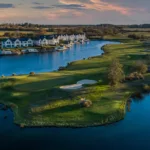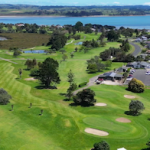
A long-running bid to build up to 170 homes alongside Hastings Golf Club has cleared its biggest hurdle, with an independent hearing panel approving the rezoning needed to enable the development — despite council planners recommending it be declined.
The decision, released on Friday 21 August 2026, approves Private Plan Change 7 “with modifications,” rezoning the club’s 82.2-hectare Bridge Pā site from Plains Production to a new Sport and Active Recreation Zone, with a bespoke “Heretaunga Golf and Leisure Precinct” overlay enabling housing, visitor accommodation and expanded club facilities. The four commissioners — chair Kitt Littlejohn, George Lyons, Bill Wasley and Hastings District councillor Heather Te Au-Skipworth — were unanimous. The full hearing panel decision (PDF) is published on the Hastings District Council website.
A plan years in the making
The project traces back to 2018, when the club began looking for ways to fund an overhaul of its ageing clubhouse and facilities without relying on membership fees and green fees alone. That work led to a partnership with Golf Sport Development Limited Partnership (GSDLP) — golf course designer Greg Turner, along with Ryan Brandeburg and David Moore — which formally lodged the plan change request with Hastings District Council in November 2023 (Golf Industry Central).
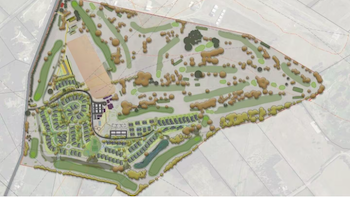
Under the masterplan, the golf course itself is retained and enhanced, with four replacement holes, a new clubhouse, upgraded maintenance facilities, staff accommodation and a health and recreation club. Around 12 hectares is set aside for housing: the concept plan lodged with the application shows 134 residential units — 13 premium dwellings, 93 lifestyle dwellings and 28 terraced apartments — with the approved provisions allowing for growth up to roughly 170 units, some available as short-stay visitor accommodation. Club members backed the wider redevelopment concept in a November 2021 vote, with 78 percent in favour.
Council wanted it declined
The approval comes despite the council’s own reporting planner, Rowena Macdonald, recommending the plan change be turned down. Her concerns centred on four issues: the permanent loss of versatile Heretaunga Plains soil from primary production, reverse-sensitivity effects on surrounding rural land uses, the risk that new residents could constrain operations at neighbouring Hastings Aerodrome, and the proposal’s location outside the area identified for growth under the Napier-Hastings Future Development Strategy.
Ninety-seven submissions were received when the plan went out for public consultation in early 2025, with 81 opposed, 12 in support and four offering qualified or partial support. Opposition was dominated by aviation interests — the Hawke’s Bay and East Coast Aero Club, the Hawke’s Bay Microlight Club and Gliding Hawke’s Bay and Waipukurau — along with the Hawke’s Bay Car Club and horticultural operator Gourmet Blueberries Limited, which disputed the applicant’s assessment of the site’s soil quality and productive potential (RNZ).
The aerodrome, which has operated since 1932 and handles roughly 40,000 aircraft movements a year, was the most contested issue at the five-day hearing held in April and May 2026. Aero Club witnesses argued that housing beneath established flight paths would expose residents to aircraft and helicopter noise and eventually generate complaints that could restrict flying activity — including during emergencies, given the aerodrome’s role in the response to Cyclone Gabrielle. GSDLP countered that all proposed dwellings sit outside the operative and modelled noise contours, and offered acoustic treatment, lighting controls and no-complaints acknowledgements to manage any residual risk.
The panel ultimately preferred the applicant’s evidence on the disputed issues, finding the housing could proceed without unacceptably compromising the aerodrome’s operation or the wider productive land resource — though the full reasoning runs to dozens of pages within the decision.
Mana whenua support, with conditions
Ngāti Pōporo, the mana whenua and kaitiaki for the site, gave conditional support to the plan change through Korongatā Marae. That support was formalised in a Memorandum of Understanding between the marae, GSDLP and Hastings Golf Club, covering matters including cultural monitoring during construction, input into naming and site design, wetland and stream restoration, and reduced reliance on groundwater through the reuse of treated wastewater for course irrigation.
What happens next
The approval is a rezoning decision, not a construction consent — GSDLP and the club will still need to obtain subdivision, land-use and regional resource consents before any building work begins. GSDLP has previously indicated it is keen to move quickly, with much of the technical planning already done in anticipation of a favourable outcome.
Whether the decision will be appealed remains to be seen, given the scale of opposition from aviation and rural-production interests during the hearing process.